John Hussman says we are headed for a stock market crash!

UnknownDear Mr. Market:

If you’re smart…does it imply that you’re always right? In many instances that may often be the case, but when it comes to investing, some of the most brilliant people on the planet are reduced to buffoons by irrational and unpredictable markets. When you add in a 24/7 media cycle and the fact that human beings are emotionally driven creatures…your IQ (or stubbornness) can actually work against you.

As huge fans of behavioral finance we also want to once again remind you that your own brain (whether it be “smart” or pedestrian) is wired to connect certain dots even if the conclusion is wrong or completely random. One famous adage will serve as the theme for this entire article:

“Even a broken clock is right twice a day.”

Take a brief moment to read the following article that surfaced last week: Continue reading

Even a broken clock is right twice a day

analyst 3Dear Mr. Market:

Wall Street is notorious for putting analysts (or any individual) on a pedestal when they make a prediction that happens to be correct. As quickly as their ‘celebrity status’ is awarded it is often just as quickly taken away! The recent downfall of Meredith Whitney offers a lesson that everyone can learn from.

Whitney was awarded her ‘star status’ the fall of 2007 when she made a bearish prediction on Citigroup (C) as an analyst at Oppenheimer. Shortly after she made her call the stock tumbled and the CEO, Charles Swift, resigned. She was credited with predicting the financial crisis that followed in 2008 and became a regular with the business media. With her ‘celebrity status’ she resigned from Oppenheimer in 2009 to form her own firm focused on research and hedge fund management.

It did not take long for her shining star to become tarnished as she missed on several predictions that Wall Street followed her on. She called for municipal bonds around the country to default in 2010 and then in 2013 for the central U.S. to flourish economically while both coasts would struggle. Neither came anywhere close to becoming a reality and Whitney found herself struggling to regain the notoriety that she once enjoyed. Most recently she launched a hedge fund in 2013 that she shut down just last month. Continue reading

MPG Core Tactical 60/40: March 2015 Performance Update

 MW-BB798_sm6040_20130422180557_MDDear Mr. Market:

You don’t have to be a professional money manager to be aware that the swift decline in oil prices has been one of the most impactful financial headlines in years. As a matter of fact if you didn’t own a computer, read a newspaper, or have basic access to media, you would still know that oil has dropped like a rock. All you had to do was go to the gas station and see that it costs far less to fill up your tank today than it did last year.

What you may not have noticed, however, is the huge appreciation in the U.S. dollar. The U.S. dollar index compares the dollar with a basket of other currencies and it spiked up 50% in the first couple weeks of March. It has already risen almost 8% year to date and this has impacted the stock market in ways that many are unprepared for. With any situation like this there are silver linings and opportunities that we’ll discuss later in this article.

First let’s review where we’re currently at and what we did last month:

Here’s the current summary of the MPG Core Tactical 60/40 portfolio mix, which is updated as of this writing (April 1, 2015).

Click here to compare our portfolio against the benchmark

What adjustments did we make?

The following moves were made during the month of March:

3/13/15:  Bought 200 more shares of VO (Vanguard Mid Cap Index) @ $126.19 ~$2 worth

3/25/15:  Bought 75,000 final shares of MONIF (Monitise) @ $0.191 ~$14k worth Continue reading

Target your sell discipline

Target arrow 1Dear Mr. Market:

There you go again Mr. Market … You’ve trumpeted your tempting sirens and lured in people who were deathly scared of the stock market to now jump in. The S&P 500 is once again flirting with all-time highs but is the music about to stop? You make it easy to buy a stock but why is it so hard for you share the catalysts that tell investors to sell? Mr. Market is famous for encouraging you to sell with emotion but isn’t there a better way?

In our opinion, there are three main criteria that should be used in forming a disciplined and repeatable sell decision. In order to be a successful investor you need to master and take them all into account before you ever buy a stock.

So…what are the three main criteria?

  1. Fundamental Analysis: There are a slew of fundamental issues that could warrant a sell decision. If you’re willing to buy a stock you’ll need to monitor fundamental metrics ranging from earnings, valuation, cash flow, and debt, among others. Lumped into this category should be a keen awareness of key changes in management and their effectiveness.
  2. Technical Analysis: Whether you believe in following the charts and trading patterns of a stock or not…you still need to be aware of them. Like it or not, many decisions from the bulk of the investing world are made or triggered due to technical analysis so even if you think it’s hogwash don’t be short-sighted and ignore them.
  3. Investor Sentiment: Ideally, you’ve kicked the tires and performed your due diligence (reasons #1 and #2 above) on what made you buy the stock in the first place. If the honeymoon phase is no longer there, it may be time to sell. Don’t get us wrong here…this is not about selling because everyone else is. The idea here is to analyze whether the trend is moving in a direction that is not going to help you as a shareholder. Of the three criteria this is perhaps the most challenging to master because it forces you to use your eyes and brain as opposed to your emotions.

Continue reading

Who told you the S&P 500 is your benchmark?

benchmark4Dear Mr. Market:

Everyone wants to be associated with a winner. We are all familiar with the famous quote, “the thrill of victory and the agony of defeat” from ABC’s Wide World of Sports. Imagine that you are at a sporting event, you glance at the scoreboard but it shows nothing … at the end of the game you have no clue if your team won or loss. Some people claim your team won while others are not so sure. Mr. Market does exactly this to investors with their investment portfolios on a consistent basis.   As an investor how do you effectively gauge how your investment portfolio has performed and if you are victorious or humiliated in defeat?

The media would have us all believe that investors should use the S&P 500 or the Dow Jones Industrial (DJIA) as a benchmark against their portfolios. Turn on the nightly news or open a newspaper and you will quickly spot what each index closed at and what percentage they are up or down for the year. While everyone would agree that it’s important to have a sense of how the market is performing, is this the proper measuring stick investors should use to gauge how their own investments are performing?

A quick summary of the indices the media force-feed us on a daily basis: Continue reading

MPG Core Tactical 60/40: January 2015 Performance Update

MW-BB798_sm6040_20130422180557_MDDear Mr. Market:

Even if you didn’t watch the 49th Super Bowl on Sunday, you inevitably heard something about it. We admittedly did not have a dog in the hunt and took the side of “let’s at least hope for an entertaining game”; and guess what folks…that’s exactly what America got!


Regardless if you rooted for Seattle or New England, there was plenty of excitement and surprises. Even if you could care less and were in the “I can’t wait until half time camp” you got to see Katy Perry perform with eight outfit changes. (yes…eight)

How does all this relate to the stock market and the MPG Core Tactical 60/40 portfolio? Well…we’re only one month into 2015 and volatility has come back with a vengeance! During the month of January the Dow Jones had 14 of the 20 sessions end up with triple-digit days to either the upside or downside.

The broader market indexes are now down -4% from their December 2014 highs. The S&P 500 also dropped -3.1% in January, which by the way…was the exact same performance as in January of 2014! For those with short-term memories, allow us to remind you how the “experts” said the bull market would end due to how we started the year out. (that doesn’t quite line up with how 2014 finished as a whole…does it?) Continue reading

MPG Core Tactical 60/40: December 2014 Performance Update

MW-BB798_sm6040_20130422180557_MDDear Mr. Market:

We’re already two weeks into the New Year and want to make sure we wrapped up any loose ends with how you finished up 2014.

We finished up last month’s edition of the MPG Core Tactical Portfolio series by saying that oil prices could continue dropping to even under $50 per barrel. We’re not in the business of peering into a crystal ball and prognosticating, however this “prediction” was mentioned simply due to all the noise surrounding oil and its dramatic plunge. A multitude of experts began making statements that oil prices “are very near if not already at a bottom”. Mind you, this was just last month when oil finally dipped under $65 per barrel. The problem with these “experts” predicting bottoms (or anything for that matter)…is that not a single one knew that oil was near a top back in June or that it would fall as fast as it has. As of this writing oil has dipped again and now sits just under $45 per barrel!

What does about a 60% haircut in oil prices mean to the stock market? Simply put, the bulls believe that it is a positive for economic growth and is basically like a huge tax cut for consumers and therefore acts much like fiscal stimulus. The bears will opine that falling oil prices mean that the risks of global deflation are real and that the “kick the can down the road” mentality of a market that has been propped up for over five years is about to come to an ugly end. Continue reading

Is the energy sector spOILing your portfolio?

OIl#2Dear Mr. Market:

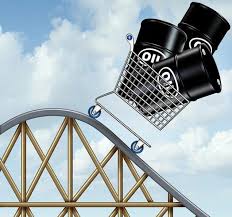
The price of oil has been dropping like a rock! On Monday (12/8/14) the price of oil hit a new five-year low at $63.05 per barrel; earlier this year it was trading at over $100. We haven’t seen prices this low since October 2009!   The press and media can’t stop talking about oil prices lately and that has many investors thinking that the sky is literally falling around them!

Many investors portfolios are over allocated to energy stocks as the sector has delivered impressive returns along with some very attractive yields the last several years. This decline is impacting many well-known energy stocks like: ConocoPhillips (COP), Exxon Mobil Corp. (XOM), Marathon Oil Corp. (MRO) and Chevron Corp. (CVX) as they are all posting negative returns this year and several of them are down -20% or more in the last 3 months alone.

The media is quick to point fingers as to who or what is to blame for causing this drastic price decline. When you look at both domestic and international factors it is challenging to figure out where to even start! Is OPEC (Organization of Petroleum Exporting Countries), ‘fracking’, shale production, simple supply/demand imbalances, global economies or countless other factors to blame? Our answer might actually surprise you… it doesn’t matter! Even if you knew what was causing this volatility, would it make the situation you currently find yourself in any better? This is the perfect example of a time when listening to the financial media will not help you or your decision-making; especially if you have too much exposure in the energy sector. Continue reading

Avoid Holiday Stock Envy!

holiday5

Dear Mr. Market:

The holiday season is upon us!  We will soon be spending time with friends and family at gatherings as we celebrate this time of year. Let’s take a moment to look at a conversation that commonly takes place this time of year:

John – “How are you doing? I heard you moved on to a new job a couple of months ago, how is that going?”

Jane – “I am great! Yes I did start a new job and am really excited about it, the company is doing great and I am excited about the future.”

John I’ve heard it’s a great place to work – their stock has been doing really well! How about the stock market this year, crazy huh?” 

Jane – “Their stock is amazing! It’s helped my portfolio a ton, I’ve also got a couple of stocks that got me back on track and might make retirement come much faster than I thought!”

John – “Really? I haven’t invested much in individual stocks. Do you do this yourself or have somebody that helps you out?”

Jane – “I read a lot and buy some newsletters but basically I do it myself.  It really isn’t that hard.”

John – “I just don’t have the time for that. What has worked out so well for you?”

Jane – “Well here are a couple of names you should look at that have been doing really well for me this year…

And so the story goes… John writes a few stocks down on a cocktail napkin and puts it in his pocket with a smile as he thinks about the incredible growth his portfolio will soon experience. On Monday he signs into his online brokerage account and without doing any research or due diligence he buys large positions in 3 different stocks with the blind assumption that they will go nowhere but up…but do they?! Continue reading

Understand the Herd…don’t follow it!

Investor StampedeDear Mr. Market:

It is human nature to want to fit in or be part of the crowd. We all like to feel that we belong to a group and are not isolated. Take a moment and go back to your youth…everyone can remember a situation when someone asked us if we did something, “just because everyone else was doing it?” Another favorite that is asked of children and teens is, “would you jump off a cliff if everyone else was doing it?” Investors don’t often ask themselves these questions but as the markets have now crossed into negative territory and volatility is present they certainly should be before rushing into any decisions.

Behavioral Finance is a fascinating field and the better you understand it the better off you are as an investor. A central theme in behavioral finance is the “herd mentality”. Investopedia.com defines Herd Mentality as: “A mentality characterized by a lack of individual decision-making or thoughtfulness, causing people to think and act in the same way as the majority of those around them. In finance, a herd instinct would relate to instances in which individuals gravitate to the same or similar investments, based almost solely on the fact that many others are investing in those same stocks. The fear of regret of missing out on a good investment is often a driving force behind herd instinct.” Every individual has made a decision to fit in or be part of a group but should that include financial and investment decisions? We would answer that question with an absolute NO!  Continue reading