
No More Groundhog Day for the Stock Market

Dear Mr. Market:b67ec80ba6cb4509b60ab9f52cb984e8

Have you seen the movie “Groundhog Day”? If you haven’t it’s comedy-fantasy from 1993 starring Bill Murray. In this movie he portrayed a Pittsburgh weatherman who was on assignment to cover the annual Groundhog Day event in Punxsutawney, Pennsylvania. Murray’s character ends up being stuck in a time loop where no matter what he does he ends up repeating the same day again and again.

Until just the past couple of days it feels like the stock market was also trapped in some sort of Groundhog Day paradigm. We have not experienced a correction in over 15 months and no matter what the headline the results on the markets where the same as the day prior; green, positive tickers, and smooth sailing. We just saw the best January in 20 years after a year where the S&P 500 recorded a positive return every single month for the first time ever. All these records transpired with the lowest market volatility ever.  So what just happened?

Did the groundhog pop his head out and cast a different shadow than anyone was expecting? No…not really. Everyone we know (layman or expert) has been saying eventually it would end. Nothing keeps going up forever. While we disagree with lightweight analysis that stocks are overvalued, the bull market eventually has to take a breather in order to make a final push higher. There is no recession in sight so what we’re finally seeing is a long overdue correction.

What is a stock market correction?

It’s been so long that it might be helpful to refresh your memory! First and foremost, you must recall that prior to Groundhog Day (sorry…couldn’t resist!), stock market corrections happened all the time! On average they occur once every 357 days, or at least once a year. They’re part of the economic and stock market cycle and for a healthy market to advance you actually should want to see them pull back every so often. We have strong fundamentals right now and things are trending in the right direction otherwise we wouldn’t be minimizing this recent market action.

Screen Shot 2018-01-22 at 7.42.35 AM

By definition a correction is -10%. (a pullback being in the -5% range) A full on bear market is where we would see -20% or more from peak to through. With the average correction, not only can it not be predicted, but by the time people figure it out it’s too late and the market is back to moving higher. Continue reading

Dividend Investing … are you chasing yields?

Chasing DividendsDear Mr. Market:

With interest rates at rock bottom levels many investors have gravitated to dividend yielding stocks over the last several years. Money markets, certificates of deposit and bonds simply are not delivering the rates that investors are looking for or have come to expect. It has left investors looking for other options to generate the income that they are counting on but what are the long-term ramifications? Are investors chasing yields with the risk of digging themselves into a deeper hole? What should investors look for and how can they manage their portfolios effectively?

It doesn’t take much effort to find a laundry list of stocks with very attractive yields. In fact if you simply run a screener on Google it will return a list of nearly 100 stocks that offer a yield of 10% or more! With the stock market continuing its upward trend investors have been moving to these stocks chasing the yields with little attention being paid to the underlying stock and the associated risks.

Before we jump into specific companies and industries let’s make sure we are all on the same page and understand what dividends are. Continue reading

Top 3 Economic Sectors to Invest in Now

Dear Mr. Market:

It’s clear that nobody has a crystal ball but there are a few simple tools and “rules of the road” which can help manage your unpredictable and volatile behavior. For those of us who are visual learners this simple graphic is quite helpful in knowing where you may want to allocate your stock positions relative to where we are in the economic cycle.

38871_13328881095567_rId4_thumb


There are two curves laid over each other on this graph. Simply explained, the red curve shows you where the stock market is and the green curve shows you what stage we’re at in the current economic/business cycle. Aside from some possible ability to optimally allocate stocks within the most opportune sectors in the economy, the real impact this visual shows you is that the stock market is essentially a leading indicator. In general, the stock market is a forward-looking gauge of what investor expectations are of the economy and interest rates. Continue reading

Under Armour (UA) – Buy, Sell or Hold?

ua1Dear Mr. Market –

Throughout 2014 consumers have proven that they can be extremely fickle, looking for superior products at the best possible price. They have been very selective how they spend their hard-earned money forcing companies to be both creative and resourceful. When looking at consumer discretionary companies returns have been all over the board, separating the contenders from the pretenders. For a company to be successful they must provide a superior product with quality service at a competitive price. When it comes to the sporting goods/apparel industry there is a relatively young company that has emerged as a leader and is playing ball with the big boys.

Under Armour (UA) has burst onto the sports/fitness industry scene over the last decade. With bold marketing and innovative products they have become a force and have caught investors attention. UA is up over 34% YTD and has left many of its competitors in the dust: Nike (NKE, YTD =-1.87%), Lululemon Athletica Inc. (LULU, YTD = -33%), Adidas (ADDYY, YTD = -24%) and Columbia Sportswear (COLM, YTD = +3%). With impressive numbers like this investors are forced to ask themselves if the stock still has positive upside or if it is too late to take a position? Continue reading

InvenSense (INVN) : Motley Fool’s Secret Wearable Technology Stock!?


INVN #2Dear Mr. Market:

Technology is a bit like true love. You have to believe in it but it can also bite you in the ass.
Read through this article and you’ll see how this relates to a particular investment!

The technology Industry can be a challenging sector for investors. Perhaps the best way to describe it is with a popular saying … “the one constant is change itself.” Plenty of analysts and investment firms scour through stock ticker symbols looking for the next Apple (AAPL), Amazon (AMZN) or Google (GOOG).

We couldn’t help but notice the Motley Fool’s recent …shall we say, “stock pitch” about a company that could be your next homerun! If you’re a die-hard Apple fan, wouldn’t you like to know who their next HUGE inside supplier is? Rewind the clock and take for example the desktop computer or the cell phone you have within inches of your hand right now…

Put Apple, Sony or IBM on the shelf for a minute and think about investing in the next company that has a stake in every sale regardless of the brand you choose? In other words, buy the “chip” or technology that’s inside of each device instead of trying to figure out which phone or computer manufacturer is going to win the battle. Continue reading

Windhaven Portfolios: Is Schwab just blowing hot air?

Dear Mr. Market:

The investment industry is notorious for not being transparent with investors.  The industry tends to be a shade of grey as opposed to being black and white. There are often hidden agendas or conflicts of interest that the average investor is never aware of or informed about.  Think back to some of the situations that have negatively impacted investors in just the last few years: Bernie Madoff, Insider Trading, the Mortgage Industry debacle and the meltdown of Enron!  Conflict of interest is essentially why the Sarbanes-Oxley Act is now in existence.

Conflict of InterestOccurs when an individual or organization is involved in multiple interests, one of which could possibly corrupt the motivation. (from Wikipedia).

WindhavenToday we will take a look at an investment firm that has had incredible growth over the last several years: Windhaven Investments.

schwabIn 2010 Charles Schwab & Company (SCHW) purchased a small investment advisory firm in Boston named Winward Investments.  The firm’s strategies had posted impressive results for several years and didn’t use the industry standard ‘buy and hold’ type of approach.  They used primarily ETF’s (Exchange Traded Funds) and claim to invest in over 40 different sectors, participating in positive markets and protecting in downturns.  Schwab paid a hefty price for the firm, paying $150 million in cash and stock (source: WSJ). Continue reading

Should You Buy Target (TGT) Stock?

Target InvestigationDear Mr. Market:

With the holiday season now in the rear view mirror U.S. consumers are being reminded of the world we live in.  In the middle of the holiday shopping season Target made an announcement that had an impact on millions of individuals.  On December 19th Target announced that 40 million credit and debit cards had been jeopardized by a cyber attack.  Since then the number of cards has grown to 70 million, it has been reported that the number could grow to as many as 110 million!  Just last week Neiman Marcus released news that it is dealing with a similar situation and other retailers are likely to be in the same boat in the coming weeks.

On Friday (January 10th) Target announced that the security issue had a negative impact on their holiday shopping results.  Stores saw sales decline up to 5% (depending on location) when compared to the previous years results.  When 4th quarter earnings are announced on February 26, 2014, the additional expenses the company has incurred due to the hacking incident will certainly have an impact.  CEO Greg Steinhafel announced that 4th quarter EPS (earnings per share) were lowered to $1.20 – $1.30 from the previous guidance of $1.50 – $1.60.  Continue reading

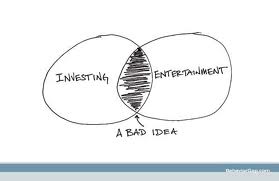
Is Jim Cramer Really Your Financial Advisor?

Unknown-8Dear Mr. Market:

Many investors have made fortunes off you and others have of course lost their shirts. There is another tranche of folks that we want to bring to your attention and that is about the people who have made money regardless of how well they predicted your next move; let’s talk about the entertainers that you keep in business.

Anytime someone has made millions of dollars from investing we’re going to at least listen and try to learn what they’re all about. In the case of Jim Cramer, however, he’s made his money from Continue reading

Are you really looking for horrible investment advice?

Dear Mr. Market,

How great would it be to have a job where you could constantly deliver results short of expectations and never have to worry about being fired?  What if you could always simply blame your lack of performance on random external forces or global events?  Imagine if you had a yearly performance review that went something like this…

 “You missed your target goals by 28% and were wrong more often than you were right!  Nice work, we are going to give you a bonus and a 10% raise!”

pay performance

 This doesn’t happen in the real world…or does it?!  The financial services industry has become notorious for overpaying executives even when the company itself is struggling to survive or is even on the verge of declaring bankruptcy.  For example, Richard Fuld of Lehman Brothers was one of the 25 best-paid CEO’s for eight years straight – right up until his firm collapsed in 2008.  It has been called ‘”the largest bankruptcy in history”;  it triggered a chain reaction that produced the worst financial crisis and economic downturn in 70 years!  What about professionals in the financial industry that consistently underperform but are not at risk of losing their jobs? Continue reading

Do Your Investments Need Water to Grow?

Unknown-14Dear Mr. Market:

One of the most fundamental concepts of economics is Supply and Demand.  Demand refers to how much quantity of a product or service is wanted from buyers and supply tells how much is available. We can often apply the law of supply and demand to investments to find the next lucrative opportunity. In general if there is low supply but high demand the price will rise. Conversely, heavy supply with weaker demand should lower prices. What happens if you had a resource in abundant supply but it was also scarce?  Water actually fits this paradox of sorts.

Most people have heard at one point or another that water covers about 71% of the earth’s surface.  Even the human body’s composition is somewhere in the range of 60% to 70% water. Again, although water is abundant it’s also scarce. Over 97% of the earth’s water is seawater and of the remaining 3% that is fresh water, only 1% is available for human use. Saltwater can’t be used for drinking, crop irrigation, or for most industrial applications. Not only is there a global shortage of water but also the demand for it is estimated to double every 20 years!

Investors need to understand where the next great opportunity is before it happens. Hockey legend Wayne Gretzky said it best, “A good hockey player plays where the puck is. A great hockey player plays where the puck is going to be.”  This can be applied to investing in oil over the last century as it has driven the headlines and proven to be investment worthy. While that may not change overnight there are other developments and trends to watch for and the price and supply of water is such an example. Continue reading