Force your Portfolio to be Disciplined in 2014

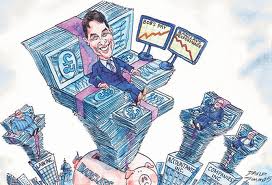
Rebalance Cartoon

Congratulations Mr. Market…you’ve delivered a tremendous year of returns to equity investors!  With the broad equity markets delivering returns over 25% (S&P =29%, DJIA = 25% and the NASDAQ = 37% as of 12/27/2013) investors are now faced with the question of what to do now?  For those investors that were invested in stocks, especially domestic stocks, year-end statements are going to look very impressive but remember that is only on paper. As we step into 2014 what should investors do with their portfolios?

Often investors choose to go with an adage commonly heard in casinos – “Let it ride!” Although the market defied odds and dodged several ominous obstacles, there is no guarantee that it will continue to do so going forward.  Sitting back and doing nothing could very well allow those returns to dwindle away and become nothing but a memory.  It wasn’t that long ago that ‘The Tech Bubble’ hit investors with a strong left uppercut that they never saw coming.  Mr. Market delivered three years of impressive returns (1997 = 33%, 1998 = 28% & 1999 = 21%) only to see it disappear with three consecutive years of negative returns (2000 = -9%, 2001 = -11%, 2002 = -22%) and let’s not forget 2008 (-37%).   How can investors avoid repeating history while also managing the risk and unrealized gains in their portfolio?  Continue reading

Mutual Funds’ dirty little secret….Capital Gains Tax

cap gains tax cartoonDear Mr. Market:

With one of the strongest stock market years on record many mutual fund investors will end the holiday season by unwrapping a lump of coal. In January most mutual fund companies and the IRS (Internal Revenue Service) will mail out Form 1099-DIV. 2013 will bring mutual fund investors capital gains distributions ranging from 6% to 60%. It’s no secret that we’re not fans of most mutual funds and capital gains distributions are just one more reason.  Today we will take a moment to address an issue that every investor (especially mutual fund investors) needs to be aware of – Capital Gains Distributions.

Capital Gains Distribution – The payment of proceeds prompted by a fund manager’s liquidation of underlying stocks and securities in a mutual fund. Capital gains distribution occurs when a mutual fund manager liquidates underlying positions that have made gains since they were added to the fund. Capital gains distributions will be taxed as capital gains to the person receiving the distribution. (Source – Investopedia.com)

 When a mutual fund sells any position at a profit it creates a capital gain, these can be either short-term or long-term.  By law mutual fund companies are required to distribute these gains to all of their shareholders.  If the position was held for less than a year it will be considered short-term. These are distributed to shareholder as income dividends and taxed at their ordinary income rates.  Long-term capital gain distributions (over one year) are taxed as follows: 0% for taxpayers in the 10% and 15% tax brackets, 20% for individuals in the 39.6% bracket and 15% for all others.  The key thing to remember when looking at mutual funds is that the investor has absolutely no say as to when positions are purchased or sold within the fund and the taxable consequences that are incurred. Continue reading

How Should your Portfolio be Performing now?

outside boxDear Mr. Market:

How is my portfolio doing this year? Am I on track for retirement? Why is the market up big but I’m not? What would my portfolio look like if the market tanked again like it did in 2008? I’m in cash right now because I feel stocks have moved too high but I don’t trust bonds because we all know where they’re headed.

These are some common and very typical questions many investors are asking themselves this year. If any one of these questions applies to you or feels familiar, don’t think you’re alone! One common thread among all these questions or concerns is benchmarking. What exactly is a benchmark and which one is appropriate for you?

Far too often investors compare themselves to other investors, strategies or benchmarks that are completely unrealistic.  Investors need to take the time to truly understand who they are and what their goals are before they compare themselves to anyone or anything!   Let’s put this in perspective…. Let’s say you decided you wanted to start swimming to get in shape.  Would you expect to get in the pool and swim times comparable to Michael Phelps (winner of 22 Olympic medals) within a couple of weeks?  Of course not… that would be ludicrous and clearly not the right athlete to try and compare yourself to!  As crazy as this sounds many investors have similar expectations with their investment portfolio. Continue reading

How to Add 3 Nobel Prizes to your Portfolio

nerd money Dear Mr. Market:

What if you, the investor, had all the knowledge and findings that it took to win a Nobel Prize in Economics? Would you be a better investor? Believe it or not…with the amount of news disseminated in today’s hyper-information and “data dumping” world…you likely already have all it takes to be a more disciplined and well schooled investor.

This past Monday (10/14/2013) the winners of the prestigious Nobel Prize for Economics were announced.  All three winners were American, which marks a trend as at least one American has won the award since 1999.  The winners: Eugene Fama, Lars Peter Hansen and Robert Shiller were recognized for their outstanding research and work in the financial markets.  While their work does not perfectly align there are several similarities and the bottom line is that you can never trust Mr. Market!

 Summary Of The Winners:

  • Eugene Fama’s research has revealed the efficiency of financial markets. If you’re a financial advisor who makes a living pitching expensive mutual funds or annuity products at clients you won’t likely have a framed portrait of Dr. Fama in your plush office.  Fama basically states that the market absorbs information so quickly that investors simply can’t outperform it consistently.  He is credited for popularizing the use of index funds as an investment option.
  • Lars Peter Hansen works strictly with data (econometrics), creating statistical models in an effort to test competing theories.  His work has allowed researchers to focus on what truly drives the financial markets. Of the three winners Hansen is the least known and popular but he ironically helps connect the other two winners’ work into something investors need to be aware of; you simply need to derive conclusions from what you do AND do not know.
  • Robert Shiller is best known for creating the Case-Shiller Home Price Index Study and now perhaps for the fact that he is married to Janet Yellen, the next Federal Reserve Chairman.  We’re huge fans of behavioral finance so the next time you hear someone talk about a “bubble” you will know who originally broke ground on the concept. His research has shown that investors are irrational and that markets develop bubbles that will eventually burst (he predicted both the Tech and Real Estate Bubbles). Continue reading

Sorry Mutual Fund: You’re Fired!

always done it that wayDear Mr. Market:

It has been said that eight of the most expensive words in the business world are: “Because we have always done it that way!”  How often have we heard these words in our personal or professional life?  Where would we be as a country if we embraced this phrase?  Isn’t it safe to say life as we know it would not be the same if generations before us didn’t challenge the norm and truly “think outside the box”?

For decades Wall Street has fought change and attempted to maintain a shroud of secrecy with investors.  Mr. Market has become very skilled at pushing aside information and research that questions the norm and in many cases proves him completely wrong.  In this article we will look at some facts and figures that simply can’t be argued with or twisted into something that they are not.  If you are an investor who owns any mutual funds you need to read this! Continue reading

Looking Under the Hood of your Company Retirement Plan

Dear Mr. Market:

401k under the hoodIf you ask any hard working American what their goal is the answer will usually have something to do with retirement.  While this common goal should be attainable through focus and discipline the market has certainly thrown its fair share of setbacks at investors.  For most Americans their home is their largest asset, and second is their retirement plan (401(k), 403(b), Simple IRA, SEP IRA, etc).  You have a limited amount of control over the value of your home but how can you manage and monitor your retirement plan to help make your retirement goals a reality?  In this article we will take a step back to the basics and look at factors that will have a profound impact on the performance of your retirement accounts and what you can do to control them.

Last fall legislation was passed requiring 401(k) providers to completely disclose their entire fee structure to participants. Investors will now be able to see what fees are associated with the various funds in the plan and what they are paying to participate in their employer’s retirement plan. According to CNN Money, a working couple will see nearly a third of their investment reduced by these fees over their careers– that amounts to nearly $155,000!! Schwab reported that nearly 30% of investors had absolutely no idea that they paid any fees for their retirement plan. Continue reading

Are you really looking for horrible investment advice?

Dear Mr. Market,

How great would it be to have a job where you could constantly deliver results short of expectations and never have to worry about being fired?  What if you could always simply blame your lack of performance on random external forces or global events?  Imagine if you had a yearly performance review that went something like this…

 “You missed your target goals by 28% and were wrong more often than you were right!  Nice work, we are going to give you a bonus and a 10% raise!”

pay performance

 This doesn’t happen in the real world…or does it?!  The financial services industry has become notorious for overpaying executives even when the company itself is struggling to survive or is even on the verge of declaring bankruptcy.  For example, Richard Fuld of Lehman Brothers was one of the 25 best-paid CEO’s for eight years straight – right up until his firm collapsed in 2008.  It has been called ‘”the largest bankruptcy in history”;  it triggered a chain reaction that produced the worst financial crisis and economic downturn in 70 years!  What about professionals in the financial industry that consistently underperform but are not at risk of losing their jobs? Continue reading

“The Retirement Gamble” : How to Tip the Odds in your Favor….

retirement gambleDear Mr. Market:

How many times have we heard the comment that investing in the stock market is like gambling in Las Vegas?  The market allows people to build up their account balances and confidence only to watch it all be taken back and possibly more.  Many people experience this in ‘Sin City’ as their stacks of chips build up only to watch the casino take them all back in what seems like the blink of an eye.  While we could certainly debate the similarities and differences between Vegas casinos and the stock market there is no doubt that both have left investors feeling as though the system is rigged against them.

How nice would it be if you could tip the odds in your favor in Vegas?  What if you could see what the next card or roll of the dice would be or simply improve your chances of winning?  If investing is truly like gambling what if you could increase the odds that your retirement savings would grow more and be there for you when you need them in the future?

Recently we have heard from several investors about a very powerful and informative television report featured on Frontline titled “The Retirement Gamble”.  This presentation pulls back the curtains and exposes many of the dark and hidden secrets of the financial industry that the average investor is not aware of.  There are several factors that investors can control and limit the negative impact on their portfolio resulting in a profound difference on long-term portfolio returns.  We encourage everyone to watch the online presentation of “The Retirement Gamble” that first aired on April 23, 2013.  The presentation is approximately 50 minutes long however it could possibly be the most critical education you’ll ever receive on investing.

“The Retirement Gamble”, Frontline on PBS, April 23, 2013

This show does a tremendous job of getting down to the basics and avoiding all the financial jargons that clutters the industry.  It empowers the average investor to understand many of the key aspects of investing that they need to be aware of and more importantly what they can control.  Below are some of the key points that can be taken away from this program along with some charts and our thoughts: Continue reading

ABC’s of Investing in a 529 College Savings Plan

Unknown-6Dear Mr. Market:

Most of the time that we write to you it’s about your temper or volatile behavior and how that affects the average investor. Sometimes, however, it might be good for us to refresh our memory on “why” we invest and put up with all your ups and downs! Most investors certainly don’t watch you just for chuckles ; ideally we all have a purpose and reason to put up with all of your unpredictability and potential promise. With that being said, we would like to review some basic information as well as the pros and cons of saving for college via 529 College Savings Plans.

First and foremost let’s not waste too much time on stating the obvious: College and all the costs that come with it are more expensive than they ever have been. That trend is not reversing anytime soon so if you’re a parent or a grandparent trying to prepare and plan for the future, you need to consider the enormous price tag most universities are charging. Are you sitting down? The average private college tuition in 18 years from now will cost north of $130,000…per year! OK…how about the more reasonable route of going to a public state school? That price tag is estimated to be about Continue reading

Target Date Funds – is it time to refocus?

Off TargetDear Mr. Market :

You certainly have a unique sense of humor! Your unpredictable personality often leaves investors scratching their heads as they attempt to figure out your next move and how they should be positioned.  You’ve reintroduced us to market volatility the last few weeks and left investors scrambling.  During the first quarter of this year, investors moved billions of dollars into the equity markets as they began to gain a sense of comfort based on recent performance.  As investors muddle through the overwhelming amount of investment options available to them, more and more continue to look for the ‘quick fix’ or the ‘one stop shop’ and invest in Target Date Funds.  By simply picking the fund that has a date corresponding to a time frame they have in mind for their investment goals, they can put their portfolio on cruise control and focus on more important things. Simple, right?

If only it were truly that easy…“If it seems to good to be true, it probably is”

Investors need to take a step back and not allow ‘Mr. Market’ to play with their hard earned dollars and take a look if these funds are in fact too good to be true.  While the underlying premise of the fund appears sound, investors definitely need to kick the tires on these funds before buying them.  The typical Target Fund intends to be much more aggressive in the early years and as the years pass and the ‘target date’ approaches, they will become more conservative.  They do this through the asset allocation within the fund. Simply put, in the earlier years the portfolio has a higher percentage in stocks which then get trimmed with a reallocation and more exposure to fixed income or bonds.

Sounds perfect doesn’t it?! Continue reading