Who is the ‘Fed’ and what do they do?!

Fed Reserve CartoonDear Mr. Market:

“Who and what is the Fed”?  “What do they do” and “How do I understand what they are really saying and how it will impact me!?”  These are questions that we often hear from investors.  The Federal Reserve frequently dominates economic headlines and although its actions impact us all, very few of us truly understand what “the Fed” is or what it does.

We all hear terms like: “Don’t bet against the Fed”, “Dovish or hawkish sentiment” “Quantitative Easing” and “When will the Fed begin to taper”?  These are just the tip of the iceberg as the press and media attempt to interpret anything and everything released by members of the Fed.  Let’s take a moment and look at the basics of what the Fed is.

The Federal Reserve System (the “Fed”) is essentially the central banking system of the United States.  Through the Federal Reserve Act of 1913 it was created in response to financial uncertainties in the early 1900’s.  Over the last century the responsibilities and roles of the Federal Reserve System have evolved to address the changes in our economy. Continue reading


How Should your Portfolio be Performing now?

outside boxDear Mr. Market:

How is my portfolio doing this year? Am I on track for retirement? Why is the market up big but I’m not? What would my portfolio look like if the market tanked again like it did in 2008? I’m in cash right now because I feel stocks have moved too high but I don’t trust bonds because we all know where they’re headed.

These are some common and very typical questions many investors are asking themselves this year. If any one of these questions applies to you or feels familiar, don’t think you’re alone! One common thread among all these questions or concerns is benchmarking. What exactly is a benchmark and which one is appropriate for you?

Far too often investors compare themselves to other investors, strategies or benchmarks that are completely unrealistic.  Investors need to take the time to truly understand who they are and what their goals are before they compare themselves to anyone or anything!   Let’s put this in perspective…. Let’s say you decided you wanted to start swimming to get in shape.  Would you expect to get in the pool and swim times comparable to Michael Phelps (winner of 22 Olympic medals) within a couple of weeks?  Of course not… that would be ludicrous and clearly not the right athlete to try and compare yourself to!  As crazy as this sounds many investors have similar expectations with their investment portfolio. Continue reading

How to Add 3 Nobel Prizes to your Portfolio

nerd money Dear Mr. Market:

What if you, the investor, had all the knowledge and findings that it took to win a Nobel Prize in Economics? Would you be a better investor? Believe it or not…with the amount of news disseminated in today’s hyper-information and “data dumping” world…you likely already have all it takes to be a more disciplined and well schooled investor.

This past Monday (10/14/2013) the winners of the prestigious Nobel Prize for Economics were announced.  All three winners were American, which marks a trend as at least one American has won the award since 1999.  The winners: Eugene Fama, Lars Peter Hansen and Robert Shiller were recognized for their outstanding research and work in the financial markets.  While their work does not perfectly align there are several similarities and the bottom line is that you can never trust Mr. Market!

 Summary Of The Winners:

  • Eugene Fama’s research has revealed the efficiency of financial markets. If you’re a financial advisor who makes a living pitching expensive mutual funds or annuity products at clients you won’t likely have a framed portrait of Dr. Fama in your plush office.  Fama basically states that the market absorbs information so quickly that investors simply can’t outperform it consistently.  He is credited for popularizing the use of index funds as an investment option.
  • Lars Peter Hansen works strictly with data (econometrics), creating statistical models in an effort to test competing theories.  His work has allowed researchers to focus on what truly drives the financial markets. Of the three winners Hansen is the least known and popular but he ironically helps connect the other two winners’ work into something investors need to be aware of; you simply need to derive conclusions from what you do AND do not know.
  • Robert Shiller is best known for creating the Case-Shiller Home Price Index Study and now perhaps for the fact that he is married to Janet Yellen, the next Federal Reserve Chairman.  We’re huge fans of behavioral finance so the next time you hear someone talk about a “bubble” you will know who originally broke ground on the concept. His research has shown that investors are irrational and that markets develop bubbles that will eventually burst (he predicted both the Tech and Real Estate Bubbles). Continue reading

Sorry Mutual Fund: You’re Fired!

always done it that wayDear Mr. Market:

It has been said that eight of the most expensive words in the business world are: “Because we have always done it that way!”  How often have we heard these words in our personal or professional life?  Where would we be as a country if we embraced this phrase?  Isn’t it safe to say life as we know it would not be the same if generations before us didn’t challenge the norm and truly “think outside the box”?

For decades Wall Street has fought change and attempted to maintain a shroud of secrecy with investors.  Mr. Market has become very skilled at pushing aside information and research that questions the norm and in many cases proves him completely wrong.  In this article we will look at some facts and figures that simply can’t be argued with or twisted into something that they are not.  If you are an investor who owns any mutual funds you need to read this! Continue reading

Looking Under the Hood of your Company Retirement Plan

Dear Mr. Market:

401k under the hoodIf you ask any hard working American what their goal is the answer will usually have something to do with retirement.  While this common goal should be attainable through focus and discipline the market has certainly thrown its fair share of setbacks at investors.  For most Americans their home is their largest asset, and second is their retirement plan (401(k), 403(b), Simple IRA, SEP IRA, etc).  You have a limited amount of control over the value of your home but how can you manage and monitor your retirement plan to help make your retirement goals a reality?  In this article we will take a step back to the basics and look at factors that will have a profound impact on the performance of your retirement accounts and what you can do to control them.

Last fall legislation was passed requiring 401(k) providers to completely disclose their entire fee structure to participants. Investors will now be able to see what fees are associated with the various funds in the plan and what they are paying to participate in their employer’s retirement plan. According to CNN Money, a working couple will see nearly a third of their investment reduced by these fees over their careers– that amounts to nearly $155,000!! Schwab reported that nearly 30% of investors had absolutely no idea that they paid any fees for their retirement plan. Continue reading

Is Jim Cramer Really Your Financial Advisor?

Unknown-8Dear Mr. Market:

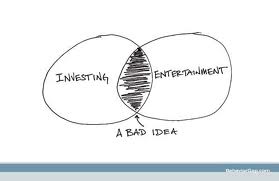
Many investors have made fortunes off you and others have of course lost their shirts. There is another tranche of folks that we want to bring to your attention and that is about the people who have made money regardless of how well they predicted your next move; let’s talk about the entertainers that you keep in business.

Anytime someone has made millions of dollars from investing we’re going to at least listen and try to learn what they’re all about. In the case of Jim Cramer, however, he’s made his money from Continue reading

Are you really looking for horrible investment advice?

Dear Mr. Market,

How great would it be to have a job where you could constantly deliver results short of expectations and never have to worry about being fired?  What if you could always simply blame your lack of performance on random external forces or global events?  Imagine if you had a yearly performance review that went something like this…

 “You missed your target goals by 28% and were wrong more often than you were right!  Nice work, we are going to give you a bonus and a 10% raise!”

pay performance

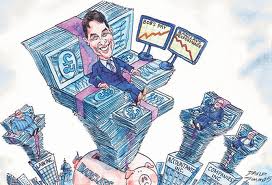
 This doesn’t happen in the real world…or does it?!  The financial services industry has become notorious for overpaying executives even when the company itself is struggling to survive or is even on the verge of declaring bankruptcy.  For example, Richard Fuld of Lehman Brothers was one of the 25 best-paid CEO’s for eight years straight – right up until his firm collapsed in 2008.  It has been called ‘”the largest bankruptcy in history”;  it triggered a chain reaction that produced the worst financial crisis and economic downturn in 70 years!  What about professionals in the financial industry that consistently underperform but are not at risk of losing their jobs? Continue reading

8 Summer Reminders for your Investments

images-12Dear Mr. Market:

Through the end of last week the S&P 500 had posted a return that was up just over 19% for the year!  We’ve seen investors pull money out of fixed income investments at a record pace as they are chasing the impressive returns that the equities markets have posted.  If you’ve been in the market you’ve certainly enjoyed some positive returns, but the question now is where do we go from here?  Below we’ve taken a few moments to put together some talking points that every investor should consider with their own portfolio.  As we are over half way through 2013 we find this a perfect time to revisit some reminders that we’ve touched on throughout this record-breaking year: Continue reading

What is a Stock Market Correction?

What is a stock market correction?

Dear Mr. Market:

Today we’re going to talk all about you and how you whipsaw investors into panic with stock market corrections. What exactly is a correction, anyway?

To some this sounds like a simple question; to others, and judging on how they act with their investing decisions, it’s clearly not.

By definition a bear market is one that has stock prices falling by 20% or more and lasts for at least two months. A stock market correction is much shorter and is typically fast in nature. Corrections often come on the heels of investor pessimism or after a bearish story that later is found to be a relatively meaningless event. In other words, corrections bring a whole different sort of emotion to the game than a bear market.

What’s interesting to know about corrections is that they occur Continue reading

Women Investors : Who Controls the Purse Strings?

Women Investing

Dear Mr. Market:

Did you remember Mother’s Day and get her something special?  As we celebrated Mother’s Day earlier this month we would not be surprised if Mr. Market didn’t do much for his mother or for women in general.  The financial services industry has been notorious for overlooking women investors however, the ‘tides of change’ are quickly approaching and everyone needs to be aware of it.

Women have become major power players and are making a huge impact in today’s financial world.  The statistics speak for themselves; here are some eye opening facts: Continue reading