
Looking Under the Hood of your Company Retirement Plan

Dear Mr. Market:

401k under the hoodIf you ask any hard working American what their goal is the answer will usually have something to do with retirement.  While this common goal should be attainable through focus and discipline the market has certainly thrown its fair share of setbacks at investors.  For most Americans their home is their largest asset, and second is their retirement plan (401(k), 403(b), Simple IRA, SEP IRA, etc).  You have a limited amount of control over the value of your home but how can you manage and monitor your retirement plan to help make your retirement goals a reality?  In this article we will take a step back to the basics and look at factors that will have a profound impact on the performance of your retirement accounts and what you can do to control them.

Last fall legislation was passed requiring 401(k) providers to completely disclose their entire fee structure to participants. Investors will now be able to see what fees are associated with the various funds in the plan and what they are paying to participate in their employer’s retirement plan. According to CNN Money, a working couple will see nearly a third of their investment reduced by these fees over their careers– that amounts to nearly $155,000!! Schwab reported that nearly 30% of investors had absolutely no idea that they paid any fees for their retirement plan. Continue reading
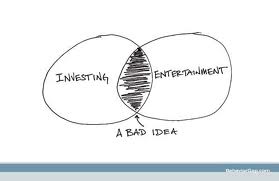
Is Jim Cramer Really Your Financial Advisor?

Unknown-8Dear Mr. Market:

Many investors have made fortunes off you and others have of course lost their shirts. There is another tranche of folks that we want to bring to your attention and that is about the people who have made money regardless of how well they predicted your next move; let’s talk about the entertainers that you keep in business.

Anytime someone has made millions of dollars from investing we’re going to at least listen and try to learn what they’re all about. In the case of Jim Cramer, however, he’s made his money from Continue reading

Are you really looking for horrible investment advice?

Dear Mr. Market,

How great would it be to have a job where you could constantly deliver results short of expectations and never have to worry about being fired?  What if you could always simply blame your lack of performance on random external forces or global events?  Imagine if you had a yearly performance review that went something like this…

 “You missed your target goals by 28% and were wrong more often than you were right!  Nice work, we are going to give you a bonus and a 10% raise!”

pay performance

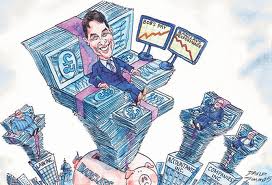
 This doesn’t happen in the real world…or does it?!  The financial services industry has become notorious for overpaying executives even when the company itself is struggling to survive or is even on the verge of declaring bankruptcy.  For example, Richard Fuld of Lehman Brothers was one of the 25 best-paid CEO’s for eight years straight – right up until his firm collapsed in 2008.  It has been called ‘”the largest bankruptcy in history”;  it triggered a chain reaction that produced the worst financial crisis and economic downturn in 70 years!  What about professionals in the financial industry that consistently underperform but are not at risk of losing their jobs? Continue reading

Where to find a top advisor?!

Top advisor - magnifying glassSo…if you’re looking for the best financial advisor there is do you simply run a quick search on Google? Would it look something like ” best financial advisor in Denver” or “best financial advisor in Orange County”?  Would you rely on a list that ranks the best financial advisors?

In nearly every aspect of our lives we rank products or services and take pride if we are associated with or use that brand.  How often have you heard that a product has a “Gold Star Rating” or is recommended by ‘Consumer Reports’?  It should be no surprise that the same applies when it comes to the Financial Services industry.  Investors want to work with the best and often rely on rankings issued by various publications and websites for this information.

The key difference is that there are many more variables that need to be taken into consideration when looking at the financial industry and ranking firms or individuals.  In this article we will take a look at a list that is published annually and is highly respected – ‘Barron’s Top 1,000 Advisors List’.  Through our discussion it will become clear why ranking financial professionals is not as easy as ranking cars or laundry detergent and the results need to be looked at closely. Continue reading

Emerging Markets: Much more than a Contrarian Investment

Unknown-17Dear Mr. Market:

It wasn’t all that long ago when most investors would build a portfolio out with the majority of it allocated in domestic stocks. This “home bias” seems odd though since if you’re truly an investor that is using your eyes to gauge opportunity, you would buy international stocks. U.S. stocks currently represent less than 49% of the world market. As a consumer of products and services just look around and think about all of your favorites. (car, electronics, appliances, toys, furniture, clothing, etc.) Where in the world are they made? We’ve all been educated on the merits of investing overseas by now…right? Not necessarily! The average American investor still has about 90% of their holdings devoted to U.S. companies.

How about we peel the onion one more layer? Of the relatively small percentage of investors that typically hold International stocks even less is allocated towards Emerging Markets. Most people perceive international stocks to carry more risk than domestic stocks (currency risk, political/regulatory risk, transaction risk, and increased volatility). All of this would theoretically be amplified when dealing with even smaller countries in lesser developed regions. Ironically enough, risk is actually lowered when adding international exposure.

Studies show that adding about 25% of your equity exposure towards International actually delivers a higher portfolio return with lower risk (standard deviation) than just holding U.S. stocks alone. Investing in International or Emerging Market stocks has higher stand-alone risk but adding it to a well-built portfolio enhances your diversification and potentially lowers your overall risk. Taking diversification one final step further can be done with “Frontier Markets” which are even smaller, have greater political and economic instability and higher risk-reward ratios. You’ll find that frontier markets have much more volatility than developed or emerging markets but also tend to have better long-term returns.

Adding International ExposureEmerging Markets are getting hammered this year and if there is one guarantee Continue reading

8 Summer Reminders for your Investments

images-12Dear Mr. Market:

Through the end of last week the S&P 500 had posted a return that was up just over 19% for the year!  We’ve seen investors pull money out of fixed income investments at a record pace as they are chasing the impressive returns that the equities markets have posted.  If you’ve been in the market you’ve certainly enjoyed some positive returns, but the question now is where do we go from here?  Below we’ve taken a few moments to put together some talking points that every investor should consider with their own portfolio.  As we are over half way through 2013 we find this a perfect time to revisit some reminders that we’ve touched on throughout this record-breaking year: Continue reading

Earnings Reports: What to look for and how to read them

Dear Mr. Market:

Earnings ReportHere we are in the middle of Earnings Season listening to the various talking heads on TV attempt to decipher the plethora of numbers that companies announce.  As they spew out seemingly meaningless information how is the average investor expected to make sense of it all?  With terms like “diluted earnings, future guidance, write downs, cash infusions and GAAP financial measures” it can certainly be a bit overwhelming!  Ultimately investors simply want to know if a company was profitable or lost money for the previous quarter and what expectations are going forward.  Why does Wall Street have to make these quarterly reports so confusing and talk over the average persons head?

We will attempt to cut through the ‘financial jargon’ and focus on the core numbers and what investors really need to look at each earnings season.   “Creative Finance” is a term that comes to mind as you read through some of the reports that are released by corporate America.  Maybe a more accurate phrase would be “you can put lipstick on a pig…but it’s still a pig!”  There is certainly a lot of window dressing that takes place each earnings season but the key is to focus on what is truly important and not get lost in the data.

The numbers that are released can have a profound impact on the stock itself as well as the entire stock market.   The market usually approaches quarterly earning reports with caution due to uncertainty. If there is one thing the market does not like, it is uncertainty.    Companies that hit or exceed their numbers will see the stock typically rise while the market will hammer companies that disappoint.  For the larger companies analysts will usually have an expectation of what their numbers should be prior to them announcing their actual numbers.  Companies will also often release their own “earnings guidance” in an attempt to set expectations.  If an industry leader stumbles with the numbers shared in their earnings announcement the stock itself and the entire industry or sector could suffer. Continue reading