Looking Under the Hood of your Company Retirement Plan

Dear Mr. Market:

401k under the hoodIf you ask any hard working American what their goal is the answer will usually have something to do with retirement.  While this common goal should be attainable through focus and discipline the market has certainly thrown its fair share of setbacks at investors.  For most Americans their home is their largest asset, and second is their retirement plan (401(k), 403(b), Simple IRA, SEP IRA, etc).  You have a limited amount of control over the value of your home but how can you manage and monitor your retirement plan to help make your retirement goals a reality?  In this article we will take a step back to the basics and look at factors that will have a profound impact on the performance of your retirement accounts and what you can do to control them.

Last fall legislation was passed requiring 401(k) providers to completely disclose their entire fee structure to participants. Investors will now be able to see what fees are associated with the various funds in the plan and what they are paying to participate in their employer’s retirement plan. According to CNN Money, a working couple will see nearly a third of their investment reduced by these fees over their careers– that amounts to nearly $155,000!! Schwab reported that nearly 30% of investors had absolutely no idea that they paid any fees for their retirement plan. Continue reading

Is Jim Cramer Really Your Financial Advisor?

Unknown-8Dear Mr. Market:

Many investors have made fortunes off you and others have of course lost their shirts. There is another tranche of folks that we want to bring to your attention and that is about the people who have made money regardless of how well they predicted your next move; let’s talk about the entertainers that you keep in business.

Anytime someone has made millions of dollars from investing we’re going to at least listen and try to learn what they’re all about. In the case of Jim Cramer, however, he’s made his money from Continue reading

Are you really looking for horrible investment advice?

Dear Mr. Market,

How great would it be to have a job where you could constantly deliver results short of expectations and never have to worry about being fired?  What if you could always simply blame your lack of performance on random external forces or global events?  Imagine if you had a yearly performance review that went something like this…

 “You missed your target goals by 28% and were wrong more often than you were right!  Nice work, we are going to give you a bonus and a 10% raise!”

pay performance

 This doesn’t happen in the real world…or does it?!  The financial services industry has become notorious for overpaying executives even when the company itself is struggling to survive or is even on the verge of declaring bankruptcy.  For example, Richard Fuld of Lehman Brothers was one of the 25 best-paid CEO’s for eight years straight – right up until his firm collapsed in 2008.  It has been called ‘”the largest bankruptcy in history”;  it triggered a chain reaction that produced the worst financial crisis and economic downturn in 70 years!  What about professionals in the financial industry that consistently underperform but are not at risk of losing their jobs? Continue reading

Where to find a top advisor?!

Top advisor - magnifying glassSo…if you’re looking for the best financial advisor there is do you simply run a quick search on Google? Would it look something like ” best financial advisor in Denver” or “best financial advisor in Orange County”?  Would you rely on a list that ranks the best financial advisors?

In nearly every aspect of our lives we rank products or services and take pride if we are associated with or use that brand.  How often have you heard that a product has a “Gold Star Rating” or is recommended by ‘Consumer Reports’?  It should be no surprise that the same applies when it comes to the Financial Services industry.  Investors want to work with the best and often rely on rankings issued by various publications and websites for this information.

The key difference is that there are many more variables that need to be taken into consideration when looking at the financial industry and ranking firms or individuals.  In this article we will take a look at a list that is published annually and is highly respected – ‘Barron’s Top 1,000 Advisors List’.  Through our discussion it will become clear why ranking financial professionals is not as easy as ranking cars or laundry detergent and the results need to be looked at closely. Continue reading

This Recession has a Split Personality

US-economic-collapse-vs-Recovery-1-300x300Dear Mr. Market:

It’s been well documented that you have a pretty volatile personality. There are days when you tempt us with optimistic stories and the potential to make tons of money in a roaring market. Suddenly, you turn on us and show investors your angry and pessimistic side with sharp drops in the stock market and ultimately their account balances.  It’s almost as though you have a split personality and we actually think that the same case can be made about our economy; the United States basically has a “split economy”.

We apparently have officially climbed out of a recession but if you ask most people on Main Street if that’s the case you’ll likely find that’s not their view. Even big businesses are still hoarding cash in what feels like nobody trusts tomorrow or what is around the corner.

Is this recession really over?

The word recession itself conjures up negative emotions and is the topic of many heavy conversations. This past recession was impactful enough to have even earned itself its very own name. It’s been called the “Great Recession” and some have even called it the Lesser Depression, the Long Recession, or the “global recession of 2009”. While so fresh on our minds, let’s first ask ourselves why that is and also assess where we are now relative to it.  Secondly, let’s ask when the next recession is coming? Continue reading

8 Summer Reminders for your Investments

images-12Dear Mr. Market:

Through the end of last week the S&P 500 had posted a return that was up just over 19% for the year!  We’ve seen investors pull money out of fixed income investments at a record pace as they are chasing the impressive returns that the equities markets have posted.  If you’ve been in the market you’ve certainly enjoyed some positive returns, but the question now is where do we go from here?  Below we’ve taken a few moments to put together some talking points that every investor should consider with their own portfolio.  As we are over half way through 2013 we find this a perfect time to revisit some reminders that we’ve touched on throughout this record-breaking year: Continue reading

Do Your Investments Need Water to Grow?

Unknown-14Dear Mr. Market:

One of the most fundamental concepts of economics is Supply and Demand.  Demand refers to how much quantity of a product or service is wanted from buyers and supply tells how much is available. We can often apply the law of supply and demand to investments to find the next lucrative opportunity. In general if there is low supply but high demand the price will rise. Conversely, heavy supply with weaker demand should lower prices. What happens if you had a resource in abundant supply but it was also scarce?  Water actually fits this paradox of sorts.

Most people have heard at one point or another that water covers about 71% of the earth’s surface.  Even the human body’s composition is somewhere in the range of 60% to 70% water. Again, although water is abundant it’s also scarce. Over 97% of the earth’s water is seawater and of the remaining 3% that is fresh water, only 1% is available for human use. Saltwater can’t be used for drinking, crop irrigation, or for most industrial applications. Not only is there a global shortage of water but also the demand for it is estimated to double every 20 years!

Investors need to understand where the next great opportunity is before it happens. Hockey legend Wayne Gretzky said it best, “A good hockey player plays where the puck is. A great hockey player plays where the puck is going to be.”  This can be applied to investing in oil over the last century as it has driven the headlines and proven to be investment worthy. While that may not change overnight there are other developments and trends to watch for and the price and supply of water is such an example. Continue reading

Should Bonds still be part of your Portfolio?

Dear Mr. Market –

BondsWe are only a little over half way through this year yet you have already taken investors on a very interesting ride.  From posting impressive results through the first half of the year and then allowing volatility to enter the market through various headlines and worldwide economic news you’ve certainly kept us all on our toes.

As investors look at their portfolios and their performance results we have seen one alarming statistic over the last month and half.  In June alone individual investors took over $80 billion dollars out of their bond positions!  Investors moved out of their fixed income positions quickly due to rising interest rates and to chase the impressive returns that the equity markets have been posting.  Bonds are often treated as the ugly stepchild of investing but we find that they are typically not truly understood by the majority of investors.  Lets take a moment to get a better understanding on the basics of fixed income investing and more importantly how and why they have a place in your portfolio.

 Bonds/Fixed Income 101:

In their most basic form bonds are essentially a promise to repay money, with interest, on a certain date in the future.  Think of them as an IOU where the borrower is obligated to pay the lender (the investor) a specified amount of money at regular intervals and then to repay the principal amount at the bonds maturity date.  There are several different types of bonds available in today’s market, the following bullet points will focus on the most common ones: Continue reading

Why do I own this Annuity and how do I get out of it?

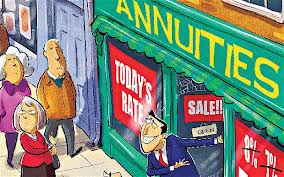
We can’t tell you how many times we have heard investors say something along the lines of, I have this annuity that I was talked into years ago, I don’t really understand it and I haven’t heard from the guy I bought it from since.   annuity pictureAnnuities are one of the most misunderstood and possibly abused financial products in the financial services industry today.  They are layered in promises that are far too often not delivered to the individual that purchased the annuity.  While they look simple in nature they are actually quite complex and it is vital that investors conduct their own due diligence and research before purchasing any annuity product.

The basic structure of an annuity is quite simple; the investor deposits money with an insurance company either in a lump sum or with scheduled periodic payments over several years.  In return the investor will receive a stream of payments either immediately or in the future for a set period of time.  The terms and conditions can vary from company to company and there are many different types of annuities and features that can be added to them.  It is important to always remember that an annuity is a contract between an insurance company and an individual for certain guarantees and that they should never be viewed as investments!  We will attempt to dig in a bit deeper and offer an overview of annuities that will empower investors to make educated and informed decisions. Continue reading

Independent Review of the Permanent Portfolio Fund (PRPFX)

images-7

Every so often we come across an investment that grabs our attention. In this case we would like to turn the clock back a bit and revisit a time when the sky was falling and “Mr. Market” seemed to have it in for all of us regardless of where you tried to put your money. That was in 2008 and without reliving too many painful memories or details…let’s just simply refresh you on the performance of certain asset classes/indexes that year:

S&P 500   =  -37.00%

Mid Cap  =  -41.46%

Small Cap  =  -33.79%

MSCI EAFE (International)  =  -43.06%

Emerging Markets  =  -53.18%

If you had any Bond exposure in your portfolio that’s probably all that you had to celebrate as they at least turned in a positive +5.24%. Most people realistically didn’t have enough Bond exposure but flocked to them in 2009. They were rewarded with another positive year with +5.93%. The problem with that, however, is that the areas they just cut bait on (stocks) returned the following:

S&P 500 = +26.46%

Mid Cap  =  +40.48%

Small Cap  =  +27.17%

MSCI EAFE (International)  =  +32.45%

Emerging Markets  =  +79.02%

So what’s the solution during market stretches like this? Continue reading