Sorry Mutual Fund: You’re Fired!

always done it that wayDear Mr. Market:

It has been said that eight of the most expensive words in the business world are: “Because we have always done it that way!”  How often have we heard these words in our personal or professional life?  Where would we be as a country if we embraced this phrase?  Isn’t it safe to say life as we know it would not be the same if generations before us didn’t challenge the norm and truly “think outside the box”?

For decades Wall Street has fought change and attempted to maintain a shroud of secrecy with investors.  Mr. Market has become very skilled at pushing aside information and research that questions the norm and in many cases proves him completely wrong.  In this article we will look at some facts and figures that simply can’t be argued with or twisted into something that they are not.  If you are an investor who owns any mutual funds you need to read this! Continue reading

Looking Under the Hood of your Company Retirement Plan

Dear Mr. Market:

401k under the hoodIf you ask any hard working American what their goal is the answer will usually have something to do with retirement.  While this common goal should be attainable through focus and discipline the market has certainly thrown its fair share of setbacks at investors.  For most Americans their home is their largest asset, and second is their retirement plan (401(k), 403(b), Simple IRA, SEP IRA, etc).  You have a limited amount of control over the value of your home but how can you manage and monitor your retirement plan to help make your retirement goals a reality?  In this article we will take a step back to the basics and look at factors that will have a profound impact on the performance of your retirement accounts and what you can do to control them.

Last fall legislation was passed requiring 401(k) providers to completely disclose their entire fee structure to participants. Investors will now be able to see what fees are associated with the various funds in the plan and what they are paying to participate in their employer’s retirement plan. According to CNN Money, a working couple will see nearly a third of their investment reduced by these fees over their careers– that amounts to nearly $155,000!! Schwab reported that nearly 30% of investors had absolutely no idea that they paid any fees for their retirement plan. Continue reading

Is Jim Cramer Really Your Financial Advisor?

Unknown-8Dear Mr. Market:

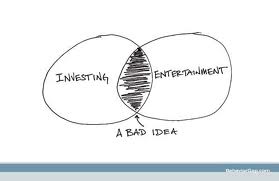
Many investors have made fortunes off you and others have of course lost their shirts. There is another tranche of folks that we want to bring to your attention and that is about the people who have made money regardless of how well they predicted your next move; let’s talk about the entertainers that you keep in business.

Anytime someone has made millions of dollars from investing we’re going to at least listen and try to learn what they’re all about. In the case of Jim Cramer, however, he’s made his money from Continue reading

Are you really looking for horrible investment advice?

Dear Mr. Market,

How great would it be to have a job where you could constantly deliver results short of expectations and never have to worry about being fired?  What if you could always simply blame your lack of performance on random external forces or global events?  Imagine if you had a yearly performance review that went something like this…

 “You missed your target goals by 28% and were wrong more often than you were right!  Nice work, we are going to give you a bonus and a 10% raise!”

pay performance

 This doesn’t happen in the real world…or does it?!  The financial services industry has become notorious for overpaying executives even when the company itself is struggling to survive or is even on the verge of declaring bankruptcy.  For example, Richard Fuld of Lehman Brothers was one of the 25 best-paid CEO’s for eight years straight – right up until his firm collapsed in 2008.  It has been called ‘”the largest bankruptcy in history”;  it triggered a chain reaction that produced the worst financial crisis and economic downturn in 70 years!  What about professionals in the financial industry that consistently underperform but are not at risk of losing their jobs? Continue reading

Where to find a top advisor?!

Top advisor - magnifying glassSo…if you’re looking for the best financial advisor there is do you simply run a quick search on Google? Would it look something like ” best financial advisor in Denver” or “best financial advisor in Orange County”?  Would you rely on a list that ranks the best financial advisors?

In nearly every aspect of our lives we rank products or services and take pride if we are associated with or use that brand.  How often have you heard that a product has a “Gold Star Rating” or is recommended by ‘Consumer Reports’?  It should be no surprise that the same applies when it comes to the Financial Services industry.  Investors want to work with the best and often rely on rankings issued by various publications and websites for this information.

The key difference is that there are many more variables that need to be taken into consideration when looking at the financial industry and ranking firms or individuals.  In this article we will take a look at a list that is published annually and is highly respected – ‘Barron’s Top 1,000 Advisors List’.  Through our discussion it will become clear why ranking financial professionals is not as easy as ranking cars or laundry detergent and the results need to be looked at closely. Continue reading

Emerging Markets: Much more than a Contrarian Investment

Unknown-17Dear Mr. Market:

It wasn’t all that long ago when most investors would build a portfolio out with the majority of it allocated in domestic stocks. This “home bias” seems odd though since if you’re truly an investor that is using your eyes to gauge opportunity, you would buy international stocks. U.S. stocks currently represent less than 49% of the world market. As a consumer of products and services just look around and think about all of your favorites. (car, electronics, appliances, toys, furniture, clothing, etc.) Where in the world are they made? We’ve all been educated on the merits of investing overseas by now…right? Not necessarily! The average American investor still has about 90% of their holdings devoted to U.S. companies.

How about we peel the onion one more layer? Of the relatively small percentage of investors that typically hold International stocks even less is allocated towards Emerging Markets. Most people perceive international stocks to carry more risk than domestic stocks (currency risk, political/regulatory risk, transaction risk, and increased volatility). All of this would theoretically be amplified when dealing with even smaller countries in lesser developed regions. Ironically enough, risk is actually lowered when adding international exposure.

Studies show that adding about 25% of your equity exposure towards International actually delivers a higher portfolio return with lower risk (standard deviation) than just holding U.S. stocks alone. Investing in International or Emerging Market stocks has higher stand-alone risk but adding it to a well-built portfolio enhances your diversification and potentially lowers your overall risk. Taking diversification one final step further can be done with “Frontier Markets” which are even smaller, have greater political and economic instability and higher risk-reward ratios. You’ll find that frontier markets have much more volatility than developed or emerging markets but also tend to have better long-term returns.
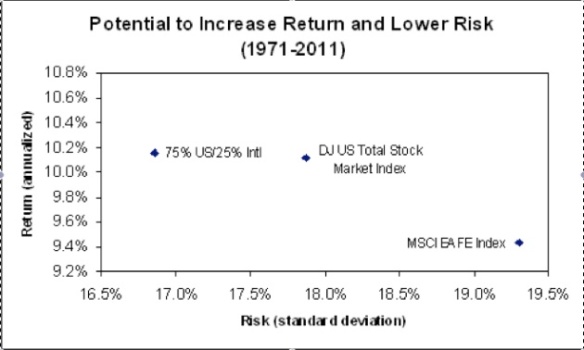
Adding International ExposureEmerging Markets are getting hammered this year and if there is one guarantee Continue reading

Should Bonds still be part of your Portfolio?

Dear Mr. Market –

BondsWe are only a little over half way through this year yet you have already taken investors on a very interesting ride.  From posting impressive results through the first half of the year and then allowing volatility to enter the market through various headlines and worldwide economic news you’ve certainly kept us all on our toes.

As investors look at their portfolios and their performance results we have seen one alarming statistic over the last month and half.  In June alone individual investors took over $80 billion dollars out of their bond positions!  Investors moved out of their fixed income positions quickly due to rising interest rates and to chase the impressive returns that the equity markets have been posting.  Bonds are often treated as the ugly stepchild of investing but we find that they are typically not truly understood by the majority of investors.  Lets take a moment to get a better understanding on the basics of fixed income investing and more importantly how and why they have a place in your portfolio.

 Bonds/Fixed Income 101:

In their most basic form bonds are essentially a promise to repay money, with interest, on a certain date in the future.  Think of them as an IOU where the borrower is obligated to pay the lender (the investor) a specified amount of money at regular intervals and then to repay the principal amount at the bonds maturity date.  There are several different types of bonds available in today’s market, the following bullet points will focus on the most common ones: Continue reading

What is a Stock Market Correction?

What is a stock market correction?

Dear Mr. Market:

Today we’re going to talk all about you and how you whipsaw investors into panic with stock market corrections. What exactly is a correction, anyway?

To some this sounds like a simple question; to others, and judging on how they act with their investing decisions, it’s clearly not.

By definition a bear market is one that has stock prices falling by 20% or more and lasts for at least two months. A stock market correction is much shorter and is typically fast in nature. Corrections often come on the heels of investor pessimism or after a bearish story that later is found to be a relatively meaningless event. In other words, corrections bring a whole different sort of emotion to the game than a bear market.

What’s interesting to know about corrections is that they occur Continue reading

Target Date Funds – is it time to refocus?

Off TargetDear Mr. Market :

You certainly have a unique sense of humor! Your unpredictable personality often leaves investors scratching their heads as they attempt to figure out your next move and how they should be positioned.  You’ve reintroduced us to market volatility the last few weeks and left investors scrambling.  During the first quarter of this year, investors moved billions of dollars into the equity markets as they began to gain a sense of comfort based on recent performance.  As investors muddle through the overwhelming amount of investment options available to them, more and more continue to look for the ‘quick fix’ or the ‘one stop shop’ and invest in Target Date Funds.  By simply picking the fund that has a date corresponding to a time frame they have in mind for their investment goals, they can put their portfolio on cruise control and focus on more important things. Simple, right?

If only it were truly that easy…“If it seems to good to be true, it probably is”

Investors need to take a step back and not allow ‘Mr. Market’ to play with their hard earned dollars and take a look if these funds are in fact too good to be true.  While the underlying premise of the fund appears sound, investors definitely need to kick the tires on these funds before buying them.  The typical Target Fund intends to be much more aggressive in the early years and as the years pass and the ‘target date’ approaches, they will become more conservative.  They do this through the asset allocation within the fund. Simply put, in the earlier years the portfolio has a higher percentage in stocks which then get trimmed with a reallocation and more exposure to fixed income or bonds.

Sounds perfect doesn’t it?! Continue reading

Fool’s Gold

images-2Dear Mr. Market:

It’s been a while since we saw you get so upset with the gold bugs. Today marked the worst two day slide to gold in 30 years. Your temper really punished holders of gold with a 13% hit.

Do you remember August 23, 2011? What happened that day? Maybe if you were a Virginia resident you might remember since that was the day a 5.8 magnitude earthquake hit the area. For those wondering, that was the strongest earthquake in the United States east of the Rocky Mountains since 1897. Back to our question though…What’s so important about August 23, 2011?

Investors sometimes have short memories but nothing specific really happened on this day; it’s what was happening that summer that we want to bring back into focus. Since we recently wrote an article about “Sell in May and Go Away” let’s actually go back to that very point in time.  After a positive month of stock market returns in April of 2011, the S&P 500 dropped -1.35% in May, -1.83% in June, and another -2.15% in July. Continue reading