Currency Markets: Not the Roller-coaster you think it is!

dollar3Dear Mr. Market:

You’ve taken equity investors on a roller coaster ride this year with the Dow Jones now delivering negative returns year to date. Investors have been scrambling to find where to invest their money as they move out of equities. The fixed income markets remain an area of doubt as interest rates are near rock bottom levels and fear of rate hikes from the Fed continue to run rampant. With all these variables and negativity in the market where should investors consider looking to invest their cash?

We’ve discussed ‘Alternatives’ before and how they warrant a place in a diversified portfolio. Often investors become a bit skeptical when they hear the term Alternative Investment as thoughts of hedge funds and ‘ponzi schemes’ come to mind.   With new regulations and monitoring in place investors can feel confident when they consider adding these types of investments to their portfolios. The investments that typically come to mind when looking at this asset class are: real estate, commodities, futures and hedge funds. Today will take a look at one component of alternative investments that is often overlooked but investors interact with everyday– the dollar or currency markets in general.

If you turn on the nightly news or read any articles about the economy it is hard not to see headlines discussing the strength and/or weakness of the dollar. What does this really mean and how can an investor take advantage of these moves? Analysts and economists tend to use terms to make themselves sound like an authority while at the same time losing 90% of their audience. Below we will discuss some of the basics:  Continue reading

MPG Core Tactical 60/40: September 2014 Performance Update

MW-BB798_sm6040_20130422180557_MD

Dear Mr. Market:

October is historically one of your stormier months and it looks like you began to rumble a month or so early this year. We’re headed into the last quarter of the year but in case you’ve missed why we’re running a series of articles around the topic of a “60/40 benchmark”, here’s a refresher:

Click here to revisit the first edition of the MPG Core Tactical 60/40 Portfolio.

Here’s the current summary of the MPG Core Tactical 60/40 portfolio mix, which is updated as of this writing (October 6, 2014).

Click here to compare our portfolio against the benchmark.

It’s finally happening. Yes…it appears the stock market is correcting. As a matter of fact for the second time this year alone the Small Cap asset class has endured a correction of -10% or more. What’s puzzling (and actually quite worrisome) is the divergence between what Large Caps and what Small Caps are doing. In a healthy and rising stock market, “as the tide rises so do all the boats”. We’ve had warnings before but the alarm bells are ringing louder since not all asset classes are moving in tandem as they once were. What we’re seeing now are perhaps the final signs of the rally peaking out.

What adjustments did we make?

The following moves were made during the month of September: Continue reading

MPG Core Tactical 60/40: August 2014 Performance Update


MW-BB798_sm6040_20130422180557_MDDear Mr. Market:

As always it’s important for both our new readers and in some cases…our existing ones to revisit what we are doing here with this series of articles:

Click here to revisit the first edition of the MPG Core Tactical 60/40 Portfolio.

Here’s the current summary of the MPG Core Tactical 60/40 portfolio mix, which is updated as of this writing (September 2, 2014).

Click here to compare our portfolio against the benchmark.

The expression of “the writing is on the wall” could not be more appropriate as we inch closer to wrapping up 2014. We work and interact with countless people in the financial services industry ranging from those who manage billions in the most sophisticated manners available, all the way to a retired blue collar worker who wants straight forward investor education and service on how to invest.

What each of these two parties have in common is that they don’t trust tomorrow and all of the warnings about a frothy and dangerous investing environment are as documented as they’ve perhaps ever been. Continue reading

MPG Core Tactical 60/40: June 2014 Performance Update


MW-BB798_sm6040_20130422180557_MD

Dear Mr. Market:

How did you treat everyone in June?

Last month we wrote about how “Sell in May and go away” did not work and for those expecting a correction…June would have to be the month something finally gives. Alas, for those in the bear camp we saw no such thing as a “June swoon” and the correction that has never come is still lurking out there somewhere. Everyone has telegraphed it by now and the longer we go without one the more severe it could be….or will it?

More importantly, is it even worthwhile trying to prepare for it? Can you prepare your portfolio for a market correction like you would your house for a natural disaster like an earthquake or a hurricane? Sure…you can but should you?

Far more money has been lost by investors preparing for corrections, or trying to anticipate corrections, than has been lost in corrections themselves.” –Peter Lynch Continue reading

Clean Energy Fuels (CLNE): Bleeding soon to become Profit

anghmap-011614Just about anyone who has invested in Clean Energy Fuels Corp. (Nasdaq: CLNE), has traveled a rough road thus far. Clean Energy has serious potential but its great story hasn’t materialized at all. The stock has done absolutely nothing for shareholders and if you’re the type of investor that screens for strong fundamentals it probably hasn’t hit your radar; at least not yet…

What do United Parcel Service (UPS), Frito-Lay/Pepsi (PEP), Procter & Gamble (PG), Ryder (R), and Lowe’s (LOW) all have in common? Each of these companies, and more and more of corporate America, is pouring money into the natural gas industry. Companies like these all see the writing on the wall with regard to energy trends and they are expanding their natural gas fleets.

The U.S. heavy-duty trucking market is beginning to embrace the economic and environmental benefits of natural gas fueled trucks.  There are over 8 million heavy-duty trucks in the U.S. consuming about 20,000 gallons of fuel per year.  The operating cost savings that operators will benefit from by converting from gasoline and diesel to natural gas along with movements towards clean air regulations bode extremely well for companies like CLNE.

Company summary:

Clean Energy is headquartered in Newport Beach, CA and has a market capitalization of almost $1.1 billion.  CLNE supplies compressed natural gas (CNG) fuel for light, medium, and heavy-duty vehicles; and liquefied natural gas (LNG) fuel for medium and heavy-duty vehicles. They are the largest provider of natural gas fuel for transportation in North America. CLNE fuels over 30,000 vehicles per year at over 500 fueling stations throughout the U.S. and Canada. The company has created and continues to develop a network of fueling stations with what they call “America’s Natural Gas Highway”. This network connects major truck corridors across the country for coast-to-coast and border-to-border natural gas fueling. Continue reading

Force your Portfolio to be Disciplined in 2014

Rebalance Cartoon

Congratulations Mr. Market…you’ve delivered a tremendous year of returns to equity investors!  With the broad equity markets delivering returns over 25% (S&P =29%, DJIA = 25% and the NASDAQ = 37% as of 12/27/2013) investors are now faced with the question of what to do now?  For those investors that were invested in stocks, especially domestic stocks, year-end statements are going to look very impressive but remember that is only on paper. As we step into 2014 what should investors do with their portfolios?

Often investors choose to go with an adage commonly heard in casinos – “Let it ride!” Although the market defied odds and dodged several ominous obstacles, there is no guarantee that it will continue to do so going forward.  Sitting back and doing nothing could very well allow those returns to dwindle away and become nothing but a memory.  It wasn’t that long ago that ‘The Tech Bubble’ hit investors with a strong left uppercut that they never saw coming.  Mr. Market delivered three years of impressive returns (1997 = 33%, 1998 = 28% & 1999 = 21%) only to see it disappear with three consecutive years of negative returns (2000 = -9%, 2001 = -11%, 2002 = -22%) and let’s not forget 2008 (-37%).   How can investors avoid repeating history while also managing the risk and unrealized gains in their portfolio?  Continue reading

Exclusive Interview with Long Short Opportunity Fund (LSOFX)

Unknown-34

Dear Mr. Market:

You are made up of so many pieces and not all move in the same direction on each day. Some stocks can rise in bear markets and some get clobbered in bull markets. That being said, we have a special treat for you today: The following interview was granted to My Portfolio Guide, LLC from management of the Long Short Opportunity Fund (LSOFX).

My Portfolio Guide, LLC (MPG): First off…thank you for the opportunity to meet and learn more about your investing strategies. Our first question is perhaps best intended to simply set the table for our clients and readers of our newsletter:

Briefly explain why investors in typical advisory relationships should even consider using a hedge fund or alternative strategy as part of their portfolio allocation?

Long Short Advisors (LS): The simple answer is to provide downside protection in an increasingly volatile world where equity markets are near all-time highs and bond yields remain near all-time lows. A typical investor has their money allocated to a traditional blend of 60% long-only equities and 40% long-only short bonds, and has generated a fantastic high single digit return from this allocation over the past thirty years. Unfortunately for these investors, the current state of the bond market dictates that these returns are not repeatable over the next decade.

We believe the bond allocation of a traditional 60/40 blend could tread water at best given the current trajectory of bond yields.

Long-term equity volatility is unlikely to change, making a larger allocation to stocks similarly imprudent, especially at today’s record highs.

Thus, investors need to diversify into alternative strategies that have the ability to benefit not only from continued overall market strength, but also potential market weakness.

MPG: Of all the hedging and alternative investment strategies out there and now available to mainstream investors, what are some of the primary reasons to consider a “long/short” type approach? Continue reading

How Should your Portfolio be Performing now?

outside boxDear Mr. Market:

How is my portfolio doing this year? Am I on track for retirement? Why is the market up big but I’m not? What would my portfolio look like if the market tanked again like it did in 2008? I’m in cash right now because I feel stocks have moved too high but I don’t trust bonds because we all know where they’re headed.

These are some common and very typical questions many investors are asking themselves this year. If any one of these questions applies to you or feels familiar, don’t think you’re alone! One common thread among all these questions or concerns is benchmarking. What exactly is a benchmark and which one is appropriate for you?

Far too often investors compare themselves to other investors, strategies or benchmarks that are completely unrealistic.  Investors need to take the time to truly understand who they are and what their goals are before they compare themselves to anyone or anything!   Let’s put this in perspective…. Let’s say you decided you wanted to start swimming to get in shape.  Would you expect to get in the pool and swim times comparable to Michael Phelps (winner of 22 Olympic medals) within a couple of weeks?  Of course not… that would be ludicrous and clearly not the right athlete to try and compare yourself to!  As crazy as this sounds many investors have similar expectations with their investment portfolio. Continue reading

2013: The Year of Stock Market Headline Horrors

New-York-Post-Headless-bo-006Dear Mr. Market:

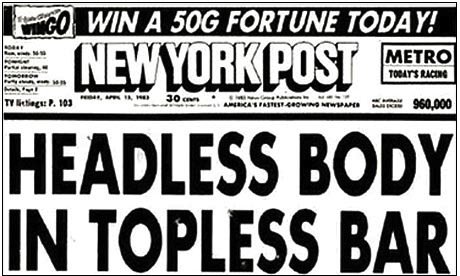
2013 has truly been a year of political headlines and deadlines. We’ve been yanked around with market threatening troubles ranging from the fiscal cliff, to sequestration, to the government shutdown, to the debt ceiling etc.

All the while the market continues to defy odds which further exasperates any rationally thinking mind.

The irony of recent headlines and the overall market environment is that it’s easy to make a convincing case that they’ll either go down this last quarter of 2013 or that they’ll finish strong and continue their banner-like year. Depending on who you follow, you’ll end up being bullish, bearish, or completely confused! This article will be short and sweet but at the end of it all you’ll know exactly where we stand and what we believe most investors should be doing.  Continue reading

This Recession has a Split Personality

US-economic-collapse-vs-Recovery-1-300x300Dear Mr. Market:

It’s been well documented that you have a pretty volatile personality. There are days when you tempt us with optimistic stories and the potential to make tons of money in a roaring market. Suddenly, you turn on us and show investors your angry and pessimistic side with sharp drops in the stock market and ultimately their account balances.  It’s almost as though you have a split personality and we actually think that the same case can be made about our economy; the United States basically has a “split economy”.

We apparently have officially climbed out of a recession but if you ask most people on Main Street if that’s the case you’ll likely find that’s not their view. Even big businesses are still hoarding cash in what feels like nobody trusts tomorrow or what is around the corner.

Is this recession really over?

The word recession itself conjures up negative emotions and is the topic of many heavy conversations. This past recession was impactful enough to have even earned itself its very own name. It’s been called the “Great Recession” and some have even called it the Lesser Depression, the Long Recession, or the “global recession of 2009”. While so fresh on our minds, let’s first ask ourselves why that is and also assess where we are now relative to it.  Secondly, let’s ask when the next recession is coming? Continue reading