Through the end of last week the S&P 500 had posted a return that was up just over 19% for the year! We’ve seen investors pull money out of fixed income investments at a record pace as they are chasing the impressive returns that the equities markets have posted. If you’ve been in the market you’ve certainly enjoyed some positive returns, but the question now is where do we go from here? Below we’ve taken a few moments to put together some talking points that every investor should consider with their own portfolio. As we are over half way through 2013 we find this a perfect time to revisit some reminders that we’ve touched on throughout this record-breaking year: Continue reading
Category Archives: Fees
10 Ways to Save Money
(1) Write it down! – You’ve probably heard this before but the act of simply writing down a goal considerably increases the chances of you actually accomplishing it. One of our favorite quotes is: “A goal without a plan is just a wish” – Antoine de-Saint Exupery
One major thing to remember when writing down goals is to make them concrete and specific. “Saving money” is not good enough. “Saving $10,000 for an exotic family vacation” is better…
(2) Set up your “buckets”– Regardless of the stage of life you are in it’s smart to have different accounts (or buckets as we call them) assigned for specific goals and needs. Initially everyone needs to at least start with their “emergency bucket” where at least three months living expenses is tucked away. Get a few other goal buckets lined up as well. If you’re working you’re likely to have a retirement bucket (401k, 403b etc). If you’re self-employed or own a business set up a SEP IRA or a Simple IRA. (there are plenty of choices here but you get the idea) Do you have a “vacation bucket” or an “automobile bucket” ? Get them established and then start filling them up!
(3) Tackle dumb debt – Credit cards are NOT dumb or evil; not paying them off in full each and every month is. We won’t get preachy here and to state the obvious the past few years have truly tested many Americans who had to do their best to make ends meet. What we’re pointing out here is that it makes absolutely no sense to hold a balance on a card when you have cash or other “non-performing” assets elsewhere. For example: If you have $5,000 on a card that charges you anywhere from 13% to 22% and your friendly neighborhood bank is ‘generously’ giving you 0.01% to hold your money….there is a serious disconnect. Continue reading
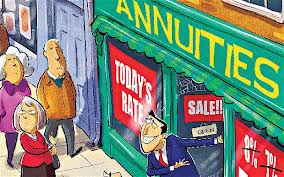
Why do I own this Annuity and how do I get out of it?
We can’t tell you how many times we have heard investors say something along the lines of, “I have this annuity that I was talked into years ago, I don’t really understand it and I haven’t heard from the guy I bought it from since”.
Annuities are one of the most misunderstood and possibly abused financial products in the financial services industry today. They are layered in promises that are far too often not delivered to the individual that purchased the annuity. While they look simple in nature they are actually quite complex and it is vital that investors conduct their own due diligence and research before purchasing any annuity product.
The basic structure of an annuity is quite simple; the investor deposits money with an insurance company either in a lump sum or with scheduled periodic payments over several years. In return the investor will receive a stream of payments either immediately or in the future for a set period of time. The terms and conditions can vary from company to company and there are many different types of annuities and features that can be added to them. It is important to always remember that an annuity is a contract between an insurance company and an individual for certain guarantees and that they should never be viewed as investments! We will attempt to dig in a bit deeper and offer an overview of annuities that will empower investors to make educated and informed decisions. Continue reading
Independent Review of the Permanent Portfolio Fund (PRPFX)
Every so often we come across an investment that grabs our attention. In this case we would like to turn the clock back a bit and revisit a time when the sky was falling and “Mr. Market” seemed to have it in for all of us regardless of where you tried to put your money. That was in 2008 and without reliving too many painful memories or details…let’s just simply refresh you on the performance of certain asset classes/indexes that year:
S&P 500 = -37.00%
Mid Cap = -41.46%
Small Cap = -33.79%
MSCI EAFE (International) = -43.06%
Emerging Markets = -53.18%
If you had any Bond exposure in your portfolio that’s probably all that you had to celebrate as they at least turned in a positive +5.24%. Most people realistically didn’t have enough Bond exposure but flocked to them in 2009. They were rewarded with another positive year with +5.93%. The problem with that, however, is that the areas they just cut bait on (stocks) returned the following:
S&P 500 = +26.46%
Mid Cap = +40.48%
Small Cap = +27.17%
MSCI EAFE (International) = +32.45%
Emerging Markets = +79.02%
So what’s the solution during market stretches like this? Continue reading
“The Retirement Gamble” : How to Tip the Odds in your Favor….
Dear Mr. Market:
How many times have we heard the comment that investing in the stock market is like gambling in Las Vegas? The market allows people to build up their account balances and confidence only to watch it all be taken back and possibly more. Many people experience this in ‘Sin City’ as their stacks of chips build up only to watch the casino take them all back in what seems like the blink of an eye. While we could certainly debate the similarities and differences between Vegas casinos and the stock market there is no doubt that both have left investors feeling as though the system is rigged against them.
How nice would it be if you could tip the odds in your favor in Vegas? What if you could see what the next card or roll of the dice would be or simply improve your chances of winning? If investing is truly like gambling what if you could increase the odds that your retirement savings would grow more and be there for you when you need them in the future?
Recently we have heard from several investors about a very powerful and informative television report featured on Frontline titled “The Retirement Gamble”. This presentation pulls back the curtains and exposes many of the dark and hidden secrets of the financial industry that the average investor is not aware of. There are several factors that investors can control and limit the negative impact on their portfolio resulting in a profound difference on long-term portfolio returns. We encourage everyone to watch the online presentation of “The Retirement Gamble” that first aired on April 23, 2013. The presentation is approximately 50 minutes long however it could possibly be the most critical education you’ll ever receive on investing.
“The Retirement Gamble”, Frontline on PBS, April 23, 2013
This show does a tremendous job of getting down to the basics and avoiding all the financial jargons that clutters the industry. It empowers the average investor to understand many of the key aspects of investing that they need to be aware of and more importantly what they can control. Below are some of the key points that can be taken away from this program along with some charts and our thoughts: Continue reading
Making Cents of Investing…Really!?
Dear Mr. Market:
As we close out the first quarter of 2013 investors are intrigued with impressive returns on top of the double-digit results posted for 2012. Throughout the first quarter mutual funds set records for the amount of money invested in them. The sad truth is that while investors watch the market continue this upward trend, breaking records in the process, the average investor is not seeing the same results in their accounts. In a recent report published by Goldman Sachs, nearly two thirds of the actively managed mutual funds underperformed the broad markets (S&P 1500 – consisting of large, mid and small cap stocks) last year. While only a third of the funds beat the market last year the results are even more disappointing in 2011 as 84% of the funds couldn’t beat the broad markets. While the so-called ‘experts’ have not posted impressive results what is even more shocking is what investors are paying these underperforming managers on a yearly basis.
According to ‘The Motley Fools’ the average actively managed equity fund charges an expense ratio of approximately 1.5%. If you sit back and really think about this the numbers are eye opening. If you invested $10,000, into an average actively managed fund, you paid $150 a year every year whether the fund performed well or underperformed (like the majority of them did the last several years). This is like paying a private tutor to teach your children and being satisfied when they come home with straight “D’s” on their report card the majority of the time. Continue reading