Are you really looking for horrible investment advice?

Dear Mr. Market,

How great would it be to have a job where you could constantly deliver results short of expectations and never have to worry about being fired?  What if you could always simply blame your lack of performance on random external forces or global events?  Imagine if you had a yearly performance review that went something like this…

 “You missed your target goals by 28% and were wrong more often than you were right!  Nice work, we are going to give you a bonus and a 10% raise!”
pay performance

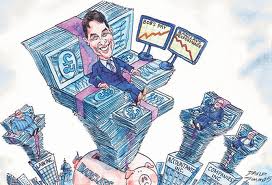
 This doesn’t happen in the real world…or does it?!  The financial services industry has become notorious for overpaying executives even when the company itself is struggling to survive or is even on the verge of declaring bankruptcy.  For example, Richard Fuld of Lehman Brothers was one of the 25 best-paid CEO’s for eight years straight – right up until his firm collapsed in 2008.  It has been called ‘”the largest bankruptcy in history”;  it triggered a chain reaction that produced the worst financial crisis and economic downturn in 70 years!  What about professionals in the financial industry that consistently underperform but are not at risk of losing their jobs? Continue reading

Do Your Investments Need Water to Grow?

Unknown-14Dear Mr. Market:

One of the most fundamental concepts of economics is Supply and Demand.  Demand refers to how much quantity of a product or service is wanted from buyers and supply tells how much is available. We can often apply the law of supply and demand to investments to find the next lucrative opportunity. In general if there is low supply but high demand the price will rise. Conversely, heavy supply with weaker demand should lower prices. What happens if you had a resource in abundant supply but it was also scarce?  Water actually fits this paradox of sorts.

Most people have heard at one point or another that water covers about 71% of the earth’s surface.  Even the human body’s composition is somewhere in the range of 60% to 70% water. Again, although water is abundant it’s also scarce. Over 97% of the earth’s water is seawater and of the remaining 3% that is fresh water, only 1% is available for human use. Saltwater can’t be used for drinking, crop irrigation, or for most industrial applications. Not only is there a global shortage of water but also the demand for it is estimated to double every 20 years!

Investors need to understand where the next great opportunity is before it happens. Hockey legend Wayne Gretzky said it best, “A good hockey player plays where the puck is. A great hockey player plays where the puck is going to be.”  This can be applied to investing in oil over the last century as it has driven the headlines and proven to be investment worthy. While that may not change overnight there are other developments and trends to watch for and the price and supply of water is such an example. Continue reading

Making Cents of Investing…Really!?

Dear Mr. Market:

Making centsAs we close out the first quarter of 2013 investors are intrigued with impressive returns on top of the double-digit results posted for 2012.  Throughout the first quarter mutual funds set records for the amount of money invested in them.  The sad truth is that while investors watch the market continue this upward trend, breaking records in the process, the average investor is not seeing the same results in their accounts. In a recent report published by Goldman Sachs, nearly two thirds of the actively managed mutual funds underperformed the broad markets (S&P 1500 – consisting of large, mid and small cap stocks) last year.  While only a third of the funds beat the market last year the results are even more disappointing in 2011 as 84% of the funds couldn’t beat the broad markets.  While the so-called ‘experts’ have not posted impressive results what is even more shocking is what investors are paying these underperforming managers on a yearly basis.

According to ‘The Motley Fools’ the average actively managed equity fund charges an expense ratio of approximately 1.5%.   If you sit back and really think about this the numbers are eye opening.  If you invested $10,000, into an average actively managed fund, you paid $150 a year every year whether the fund performed well or underperformed (like the majority of them did the last several years).  This is like paying a private tutor to teach your children and being satisfied when they come home with straight “D’s” on their report card the majority of the time. Continue reading