
Dear Mr. Market:
You’ve been around long enough to know that the smartest people in the room are not always the most profitable ones. Case in point: Michael Burry just published what may be the most meticulously researched bearish manifesto since… well, since his last one.
Let’s give credit where it’s due. The man called the 2008 housing collapse with surgical precision, bet his career and his investors’ capital on it, and was right while everyone, including his own clients, thought he’d lost his mind. That’s not luck. That’s genius. If you haven’t seen The Big Short, go watch it. Then come back.
But here’s the thing about genius: it doesn’t come with an expiration date stamped on the worry.
Read more: The Genius, The Bear, and the Broken ClockWhat Burry Is Actually Saying
In his latest Substack piece, Foundations: U.S. Market Structure & Value, Burry lays out a sweeping, data-heavy argument that the U.S. stock market is sitting on a powder keg. His key points, stripped of the charts (if you want to see the full piece with charts, please contact us below) :
Valuations are historically extreme. The Shiller CAPE ratio is currently sitting around 40x, which is the second-highest reading on record, trailing only the dot-com peak of 43.5x in April 2000. Historically, the long-run average is closer to 18–19x. Every single time the market has stretched above that mean, it has eventually come back to it. Every time. No exceptions. The current streak of not reverting? Thirty-four years… more than three times the previous record!
Mean reversion math is ugly. If the market simply returns to its modern-era (post-1990) average PE of around 27x, that’s a -32% decline from current levels. A reversion to the century-long average near 18x implies something closer to 50–55% down. And if history’s pattern of overshooting below fair value holds… as it did in 1921, 1932, and 1974, the numbers get truly uncomfortable: drawdowns of 72–77%.
The passive investing machine is the new wildcard. Since 2000, index funds and 401(k) automatic contributions have fundamentally changed how markets function. Today, over 60% of equity assets are parked in passive strategies. This flood of “no questions asked” money has inflated valuations for decades, particularly concentrating gains in the largest market-cap stocks through mechanical reflexivity. Burry’s metaphor is apt: it’s a room full of people with one small door. On the way in, everything feels fine. On the way out, it’s a different story.
The structural pillars are cracking. The corporate buyback machine, which helped prop up the largest S&P 500 names, is already in retreat. The Magnificent 7’s buybacks fell -74% year-over-year in Q4 2025. Meanwhile, companies like Oracle, Meta, and Alphabet are now borrowing to fund AI capital expenditures rather than returning cash to shareholders. And the Baby Boomer generation, which powered four decades of 401(k) contributions, is crossing into Required Minimum Distribution (RMD) territory. By 2028, those mandatory withdrawals will exceed new contributions for the first time in history.
Market shocks are getting worse, not better. The “Liberation Day” tariff crash of April 2025 ranked first in real dollar value destruction of any acute market event in history. COVID before it was the fastest bear market ever recorded. Burry’s thesis: passive investing and algorithmic trading (HFT and pod shops) have made crashes faster, deeper, and more correlated across assets. The IMF, he notes, validated this in 2026… bonds are no longer an effective equity hedge the way they used to be.
Now, a Word of Honest Context
Here’s where we have to gently pump the brakes on the doom train.

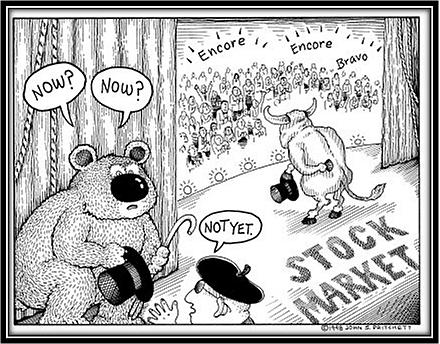
Michael Burry is brilliant. He is also, at this point in his career, dangerously close to earning the title of Perma-Bear. And perma-bears, no matter how intelligent, are like broken clocks: they’re eventually right, but you can’t build a retirement plan around “eventually.”
Consider: Burry has been warning about bubbles, passive investing dangers, and market overvaluation since at least 2019. He famously called passive investing a bubble in that year, comparing it to the CDO disaster that preceded 2008. The market proceeded to rally substantially for the next several years, briefly interrupted by COVID (which had nothing to do with valuations) and quickly recovered by government intervention, the very intervention Burry correctly argues has kept the bubble inflated longer than natural forces would allow.
He has called Palantir overvalued. Palantir kept going up. He has warned about AI exuberance. The S&P 500 kept going up.
The Shiller CAPE ratio, which is the centerpiece of Burry’s valuation case, has been “elevated” by historical standards for most of the past 30 years. Investors who sat on the sidelines waiting for mean reversion in 1995, or 2012, or 2017, missed extraordinary compounding. Robert Shiller himself (the creator of the CAPE ratio), has been careful to note that it is a poor short-term timing tool.
None of this makes Burry wrong. The math he presents is not disputable. Valuations are extreme. Passive investing haschanged market dynamics. Baby Boomers will begin net-selling. The structural bid is unwinding. These are facts, not opinions.
The honest question is: does “eventually” happen in 2026, or 2031, or 2038?
What Should You Actually Do?
This is where Dear Mr. Market diverges from the Burry worldview…not in the analysis, but in the prescription.
The answer is almost never “get out entirely and wait.” That is a strategy that requires being right twice: right about when the crash happens, and right about when to get back in. Very few investors — professional or otherwise — succeed at both.
What Burry’s analysis does argue for, compellingly, is:
- Scrutinizing your exposure to the most expensive, most passive-flow-dependent mega-cap stocks
- Taking seriously the diversification benefits of international equities and real assets
- Rethinking whether a 60/40 portfolio means what it used to mean, now that bonds and stocks are more correlated
- Making sure you’re not confusing passive compounding with safety
The market has a remarkable history of making pessimists look silly for a very long time before making them look prescient. Burry knows this better than anyone and he endured years of doubt and mockery before 2008 proved him right.
The coiled spring he describes is real. Whether it releases this year, or five years from now, or gets slowly unwound by forces we can’t yet see… that is the question no chart, however meticulously constructed, can answer.
As always, Mr. Market, you’ll keep everyone guessing!


 Dear Mr. Market: